
The FAA Part 107 Test: Everything You Need to Know About Getting Your Drone License
The FAA Part 107 Test: Everything You Need to Know
Drones have become increasingly popular, whether you're flying for fun, capturing aerial photography, competing in FPV drone racing, or starting a commercial drone business.
But as you get more involved in the hobby, you'll eventually come across something called FAA Part 107.
If you've ever wondered whether you need a drone license, how difficult the FAA Part 107 test is, or what it takes to become a certified drone pilot, this guide covers everything you need to know.
We'll explain what Part 107 means, who needs certification, what the test covers, and how you can get started.
What Is FAA Part 107?
FAA Part 107 refers to the Federal Aviation Administration's regulations for operating small unmanned aircraft systems (sUAS), commonly known as drones.
Officially called 14 CFR Part 107, these regulations establish the rules for most non-recreational drone operations in the United States involving drones weighing less than 55 pounds.
The purpose of Part 107 is to establish safety standards for drone operations in U.S. airspace.
It covers areas such as:
-
Drone pilot certification and responsibilities
-
Airspace classifications and flight restrictions
-
Weather conditions and visibility
-
Maximum operating altitudes and speeds
-
Flying over people and moving vehicles
-
Nighttime drone operations
-
Visual line-of-sight requirements
Part 107 allows qualified pilots to legally operate drones for business and other non-recreational purposes, provided they follow the applicable FAA regulations.
For example, commercial drone photography, real estate videography, aerial inspections, surveying, and other business-related drone operations generally fall under Part 107.
Do You Need a License to Fly a Drone?
Not necessarily. It depends on why you're flying.
One of the biggest misconceptions among new drone pilots is that everyone needs a Part 107 license.
That's not true.
The FAA generally separates drone operations into two categories: recreational flying and operations conducted under Part 107.
1. Recreational Drone Flying
If you're flying strictly for fun or personal enjoyment, you generally do not need a Part 107 Remote Pilot Certificate.
However, recreational pilots must:
-
Pass the free Recreational UAS Safety Test (TRUST).
-
Follow an FAA-recognized community-based organization's safety guidelines.
-
Keep their drone within visual line of sight.
-
Yield to manned aircraft.
-
Follow applicable airspace restrictions.
-
Register drones when required.
For recreational pilots, the TRUST test is the starting point.
2. Commercial and Non-Recreational Drone Flying
If you're flying for business purposes or another purpose that is not purely recreational, you'll generally need an FAA Remote Pilot Certificate under Part 107.
This includes activities such as:
-
Real estate drone photography
-
Commercial aerial videography
-
Roof and property inspections
-
Agricultural drone operations
-
Construction site monitoring
-
Paid drone services
-
Other non-recreational drone operations
An important distinction: compensation alone does not determine whether a flight is recreational. The purpose of the operation matters.
If you're unsure which rules apply to your intended flight, consult the FAA's official recreational flying and Part 107 guidance.
What Is the Part 107 Drone License?
When people talk about getting their drone license, they're usually referring to the FAA Remote Pilot Certificate with a Small UAS Rating.
This is the certification required to act as a remote pilot in command under Part 107.
To qualify, applicants generally must:
-
Be at least 16 years old.
-
Be able to read, speak, write, and understand English.
-
Be physically and mentally capable of safely operating a drone.
-
Pass the FAA Unmanned Aircraft General – Small (UAG) knowledge test, unless eligible for the alternative Part 61 pathway.
Once certified, pilots can conduct eligible drone operations under Part 107.
The certificate is not permission to fly anywhere or ignore other FAA regulations. Pilots must still follow applicable operating restrictions, registration requirements, and airspace authorization rules.
How Hard Is the FAA Part 107 Test?
The Part 107 test is a knowledge examination, not a practical flying test.
You don't need to demonstrate that you can physically fly a drone through an obstacle course or perform complicated maneuvers.
Instead, the FAA tests your understanding of aviation regulations, airspace, weather, flight planning, and safe operating procedures.
The test can be challenging for people who have never studied aviation before, especially when it comes to reading sectional charts and understanding controlled airspace.
However, with proper preparation and consistent studying, it is manageable for beginners.
How Many Questions Are on the Part 107 Test?
The initial FAA Part 107 knowledge test has:
-
60 multiple-choice questions
-
2 hours to complete
-
70% minimum passing score
-
42 correct answers required to pass
The examination is administered at an FAA-approved Knowledge Testing Center.
What Topics Are on the Part 107 Exam?
The FAA examination covers five primary knowledge areas.
1. Regulations
You'll need to understand the rules governing small unmanned aircraft, including pilot responsibilities, operating limitations, and certification requirements.
2. Airspace and Requirements
This section covers airspace classifications, controlled and uncontrolled airspace, sectional charts, and flight restrictions.
3. Aviation Weather
You'll learn how weather affects drone operations, including wind, visibility, clouds, atmospheric conditions, and weather reports.
4. Loading and Performance
This section examines how weight, balance, and aircraft performance affect safe drone operation.
5. Operations
You'll study flight planning, emergency procedures, risk management, crew coordination, and operational safety.
For many first-time applicants, airspace charts and aviation weather are among the more unfamiliar subjects.
It's worth spending additional study time on these areas.
How to Get Your Part 107 Drone License
Getting your FAA drone certification involves several steps.
Step 1: Create an FAA Tracking Number
Before scheduling your examination, create an account through the FAA's Integrated Airman Certification and Rating Application (IACRA).
You'll receive an FAA Tracking Number (FTN), which identifies you throughout the certification process.
Official website: https://iacra.faa.gov/
Step 2: Schedule Your Part 107 Test
Schedule the Unmanned Aircraft General – Small (UAG) knowledge test through an FAA-approved Knowledge Testing Center.
You'll need your FTN when registering.
Bring a valid government-issued photo ID to your appointment.
Step 3: Pass the Knowledge Examination
Complete the 60-question examination within the allotted two hours.
You need at least 70% to pass.
If you don't pass, you can retake the examination after a 14-day waiting period.
Step 4: Apply for Your Remote Pilot Certificate
After passing, log back into IACRA and complete FAA Form 8710-13.
Your application will go through the required FAA processing and Transportation Security Administration (TSA) security vetting.
Step 5: Receive Your Certification
Once approved, you'll receive your Remote Pilot Certificate.
You can then conduct eligible operations under Part 107, provided you comply with all applicable FAA rules.
Does a Part 107 Drone License Expire?
Your Remote Pilot Certificate does not simply expire every two years.
However, the FAA requires certified remote pilots to complete recurrent training within the previous 24 calendar months to maintain aeronautical knowledge recency for Part 107 operations.
The good news is that the FAA offers this recurrent training online at no cost.
You can access the official training through FAA Safety.
Can You Fly FPV Drones Under Part 107?
Yes, FPV (First Person View) drones can be operated under Part 107.
However, there are important considerations.
Part 107 generally requires the drone to remain within visual line of sight of the remote pilot or a designated visual observer.
When flying with FPV goggles, the remote pilot cannot rely solely on the camera feed to satisfy this requirement. A visual observer must maintain unaided visual contact with the aircraft and be able to communicate effectively with the pilot.
FPV pilots should also understand applicable airspace restrictions, operating limitations, and other FAA requirements before flying.
Whether you're flying a freestyle quad, racing drone, or cinematic FPV build, understanding the regulations is an important part of becoming a responsible pilot.
How to Improve Your Drone Flying Skills
Passing the Part 107 examination is an important milestone, but knowing the regulations and actually becoming a skilled pilot are two different things.
The knowledge test teaches you how to operate safely and understand the airspace system. Developing your flying abilities takes practice.
For FPV pilots especially, consistent practice is essential.
Some useful ways to improve include:
-
Practicing controlled turns and smooth transitions.
-
Developing better throttle control.
-
Improving precision and consistency.
-
Learning to navigate tight spaces.
-
Practicing controlled approaches and exits.
-
Building confidence through structured flight exercises.
One of the best ways to develop precision is to practice flying through physical obstacles.
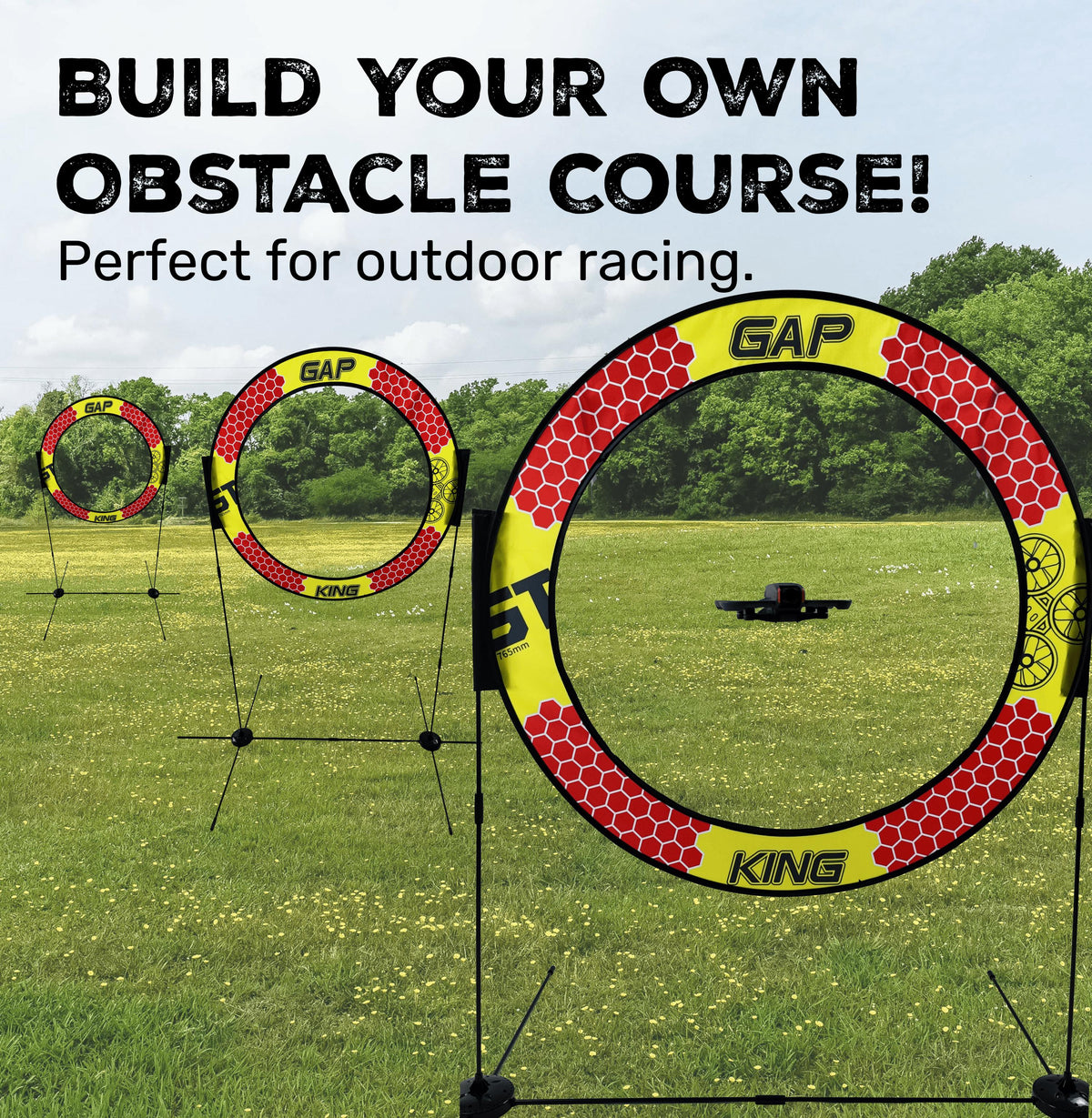
Take Your FPV Practice Further With Gap King Drone Racing Gates
Whether you're a beginner learning to control your quad or an experienced FPV pilot looking to improve your racing performance, having a dedicated practice course makes a difference.
Gap King builds drone racing gates designed for pilots, racing events, and the growing FPV community.
Our gates give pilots a practical way to set up courses, practice precision flying, and challenge themselves with different flight paths.
Instead of simply flying around an open field, you can create a structured course that encourages better control, consistency, and confidence.
They're also useful for drone clubs, STEM programs, robotics groups, schools, and community racing events looking to introduce more people to FPV.
Whether you're working toward your first race or organizing an event with other pilots, having the right equipment helps bring the experience together.
Ready to build your course?
Explore Gap King Drone Racing Gates and start building your next FPV practice course.
Frequently Asked Questions About the FAA Part 107 Test
Do I need a Part 107 license to fly a DJI drone?
Not necessarily. If you're flying strictly for recreational purposes, you generally don't need a Part 107 certificate. You must still complete TRUST and follow applicable recreational flying rules. If your operation falls under Part 107, you'll need the appropriate certification.
Can I fly a drone without a license?
Yes. Recreational pilots can fly without a Part 107 certificate, provided they meet the FAA's recreational requirements, including passing TRUST.
How much does the Part 107 test cost?
The knowledge test has a testing-center fee. The amount can vary, so check with your testing provider before scheduling. FAA recurrent training for existing certificate holders is free.
Can I take the Part 107 test online?
The initial UAG knowledge examination for most first-time applicants must be taken in person at an FAA-approved Knowledge Testing Center. Certain existing Part 61 pilots with a current flight review can use the FAA's alternative online training pathway.
How long does it take to get a drone license?
It depends on how quickly you prepare, schedule your examination, and complete the application process. Some applicants can complete the process within a few weeks.
What happens if I fail the Part 107 test?
You can retake the examination after a 14-day waiting period. Use your test report to identify the areas where you need additional preparation.
Does my drone need to be registered under Part 107?
Yes. Drones operated under Part 107 must be registered with the FAA, regardless of weight. Recreational registration requirements are different and generally apply to drones weighing more than 0.55 pounds.
Can I race FPV drones without a Part 107 license?
A Part 107 certificate is not automatically required just because you're participating in FPV drone racing. The applicable rules depend on the purpose and circumstances of the flight. Recreational racing may fall under the recreational exception, provided all its requirements are met. Organized events and other operations should be evaluated based on their specific circumstances.
Final Thoughts
Getting your Part 107 certification is a great step if you're interested in taking your drone experience beyond recreational flying.
It gives you the knowledge and qualifications needed to conduct eligible commercial drone operations while helping you better understand the rules that govern U.S. airspace.
But becoming a great pilot doesn't stop with passing an examination.
Whether you're interested in commercial drone work, FPV freestyle, or competitive racing, the most important part of becoming a better pilot is continuing to learn and practice.
At Gap King, we're building equipment for the pilots and communities helping grow the world of drone racing.
Learn the rules. Build your skills. Rule the race.
Explore Gap King drone racing gates at https://gapking.com/.